
Skip to content
Free written estimatesLocal crews
Call now (408) 555-0178
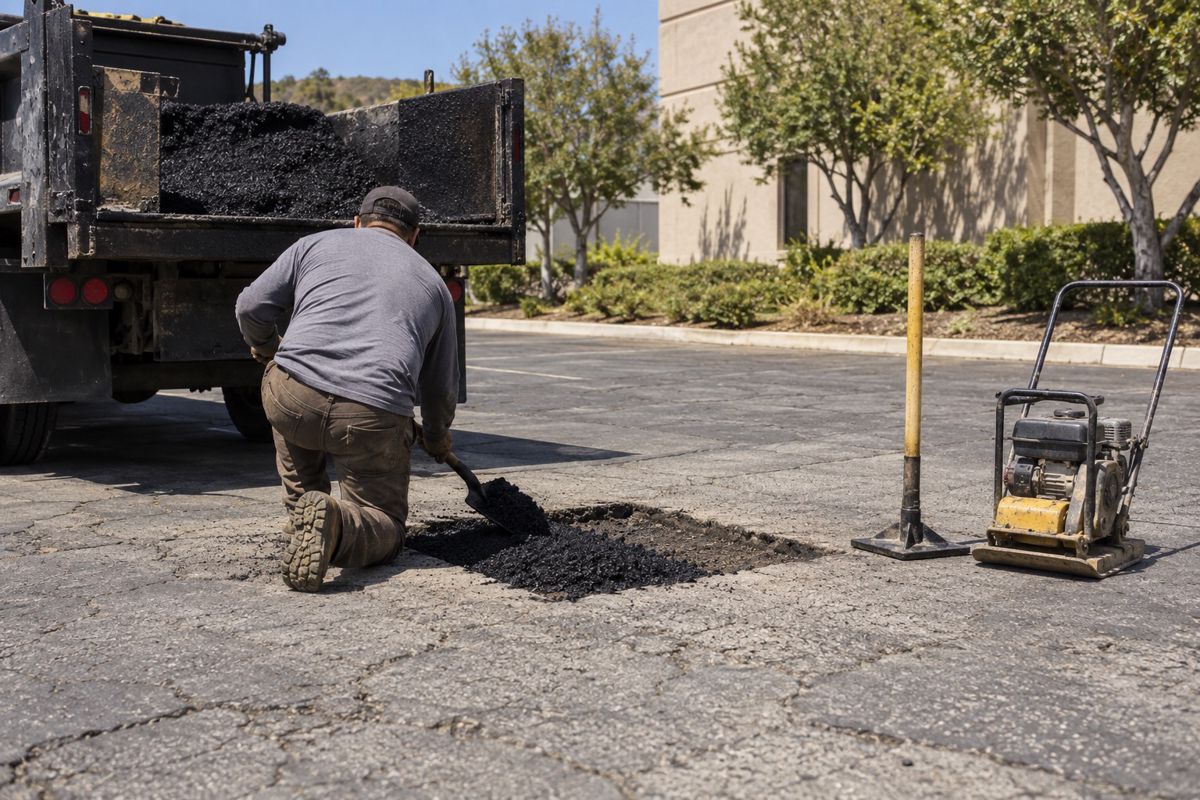
Worker filling a cut-out pothole with hot asphalt mix in a worn lot

Pothole repair in San Jose

Pothole repair and asphalt patching in San Jose

Cut out the damage, rebuild the base and patch with asphalt so small holes do not turn into big ones.

  • Cut-out patches, not quick fills
  • Driveways, lots and access lanes
  • Honest advice on repair versus resurfacing

Step 1 of 3

What do you need?

What is pothole repair and asphalt patching?

A pothole forms when water gets under the surface and the base weakens. Traffic then breaks the weak spot out and leaves a hole. Patching rebuilds that spot so it carries weight again.

There are two common approaches. A quick fill pushes loose material into the hole and compacts it. It is fast, but it often fails when it rains. A proper cut-out patch removes the damaged asphalt, squares the edges, repairs the base and fills the area with hot asphalt, then compacts it.

If you need pothole repair San Jose owners can count on to last, ask which method is being used and why. For driveways, patches also help prepare the surface for sealcoating later, which seals the edges and blends the repair into the pavement.

Why do potholes form in San Jose lots and driveways?

San Jose does not freeze like colder cities, so potholes here mostly come from water, traffic and base problems. Common causes include:

  • Winter rain. Rain from about November to April finds cracks and soaks the base, and the first heavy storms often reveal weak spots.
  • Open cracks. Cracks that were never filled let water in from above.
  • Poor drainage. Low spots hold water and soften the ground beneath.
  • Heavy loads. Delivery trucks, trash trucks and work vehicles break down weak areas.
  • Utility trenches. Patches over old trenches settle and crack along the edges.
  • Tree roots. Roots lift sections of pavement and open gaps.

Fixing the cause matters. If a pothole keeps coming back in the same place, there is usually a drainage or base problem under it.

What changes the price of patching?

Patching costs depend on how much needs to be repaired and how deep the damage goes. A written quote after a site visit is the most reliable. The main factors are these.

  • Number and size of patches. Several small holes cost differently from one large failed area.
  • Depth of damage. A shallow surface patch is different from a repair that goes down into the base.
  • Base condition. Wet or soft ground may need extra work.
  • Access. Tight spaces or lots that must stay open affect equipment and timing.
  • Drainage fixes. Solving the water problem may add steps.

If you have many patches in one area, it can be cheaper in the long run to resurface that section. We will tell you honestly if patching is the right use of your money. For widespread damage, see our parking lot paving options or driveway paving.

Most single repairs take a few hours, and a group of patches around a lot or driveway can often be done in a day. The time depends on the number of repairs and the depth of the damage. Hot asphalt patches can usually take light traffic fairly soon after they cool, and your crew should tell you when it is safe to drive on them.

Weather has an effect. Hot mix needs a dry base, so wet ground may delay a patch. Temporary cold patch material can be used between storms to make a spot safe, with a permanent repair when conditions allow. We will explain which option fits your situation.

What should you expect on the day, and when should you call?

On the day, the crew marks the area to be cut, saws or cuts the damaged asphalt, removes it and prepares the base. Hot asphalt is placed and compacted, and the edges are checked so water cannot get under them. Keep vehicles clear of the area until the crew says it is ready.

Call as soon as you notice a hole, a soft spot or a sunken area, even if it looks small. Water and traffic make it larger quickly. If you see several holes close together, or cracks that look like a web, tell us, since that points to a failing base. You can read about the rest of our services on the home page, or call (408) 555-0178 to talk about your pavement.

How it works

1

Tell us about the surface

Size, condition and goals.

2

Site visit and quote

We measure and price it in writing.

3

Prep and paving

Base, drainage and surface done in the right order.

Free written estimates Local crews Clear timelines Site cleanup included

Request pothole repair

Tell us what you need and we call you back.

No obligation.

Step 1 of 3

What do you need?

Questions about paving in San Jose

Is a cold patch good enough for a pothole?

Cold patch is a temporary fix. It is useful in wet weather when hot asphalt is not an option, because it makes a hole safe quickly. It rarely lasts as long as a proper hot asphalt patch. For a lasting repair, the damaged area is cut out, the base is repaired and hot mix is compacted into place. Your contractor should say which type they are using.

Why does my pothole keep coming back?

When the same spot fails again and again, something underneath is the cause. It may be poor drainage, a soft base, a tree root or a poorly compacted earlier patch. A thorough repair deals with those causes instead of only filling the surface. We look at the area around the hole to see what is happening, and tell you if a larger repair makes more sense.

Can you patch a pothole in the rainy season?

Small, urgent repairs can be done between storms, often with a temporary patch. Permanent hot asphalt repairs work best when the base is dry. Rain from about November to April can delay these jobs. If a hole is dangerous, tell us right away so it can be made safe, and we will plan the lasting repair for a suitable window.

Who is responsible for potholes on a private lot?

On private property, the owner or the property manager is generally responsible for keeping the surface in safe condition, and a trip or vehicle damage claim can arise from a neglected hole. Lease terms may assign the duty to a landlord or a tenant. Check your lease or ask your property manager. Prompt repair is usually cheaper than dealing with a claim.

How do I know if I need patching or resurfacing?

If damage is limited to a few spots and the rest of the surface is solid, patching makes sense. If you see widespread cracking, many old patches or large sunken areas, the base is probably failing across a wide area, and resurfacing or replacement is likely better value over time. A site visit lets us give you a clear recommendation and a written quote.

Ready when you are Call now or request a quote online. Call for a free estimate Get my free paving quote (408) 555-0178

Takes about 30 seconds. Get my free paving quote