
Skip to content
Free written estimatesLocal crews
Call now (408) 555-0178
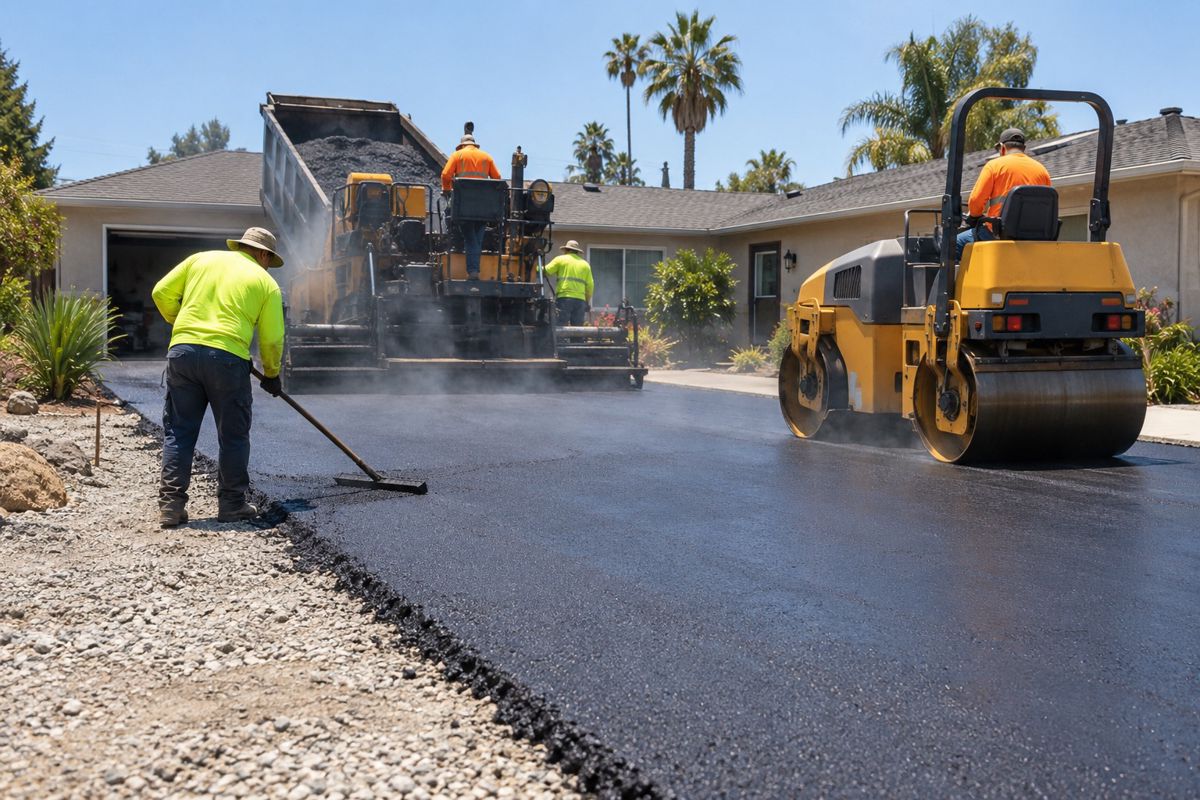
Crew laying and rolling a new asphalt driveway beside a stucco house

Residential paving in San Jose

Asphalt driveway paving in San Jose, CA

New asphalt driveways and full replacements for San Jose homes. We explain the work, put the scope in writing and pave to suit your property.

  • New driveways and replacements
  • Base preparation explained up front
  • Written quote before work starts

Step 1 of 3

What do you need?

What does asphalt driveway paving involve?

A good asphalt driveway is more than a layer of black material. The strength comes from what is underneath. A typical job for a new asphalt driveway in San Jose follows these steps.

  1. Remove the old surface, or clear and grade the ground for a new drive.
  2. Check the soil and fix soft spots.
  3. Spread and compact a gravel base, usually several inches deep.
  4. Lay hot asphalt, normally in a layer of about two to three inches for a residential driveway.
  5. Roll the surface until it is compacted and smooth, and shape the edges.

Skipping or rushing the base is the most common reason a new driveway fails early. When you compare quotes, ask each contractor how deep the base will be and how thick the asphalt layer is.

If the surface you have is still sound, the better answer may be sealcoating and crack filling or a small patch rather than a new driveway.

What problems show up on San Jose driveways?

Driveways in the Santa Clara Valley go through a long dry summer and a wetter winter. That cycle, together with the local soil, creates a few repeat problems.

  • Alligator cracking. A web of cracks that shows the base is weak or has held water.
  • Edge breakdown. The sides crumble, often where irrigation overspray reaches the pavement or where there is no support from the ground.
  • Tree root lifting. Roots from street trees and garden trees push up sections of asphalt.
  • Ruts and low spots. Water collects, softens the base and speeds up wear.
  • Fading and raveling. Sun dries the surface until small stones loosen.

Parts of the valley have clay soil that swells when wet and shrinks when dry. That movement can crack even a good driveway if drainage is poor. Fixing the cause matters as much as fixing the surface, and a site visit is the best way to see it.

What changes the price of a new asphalt driveway?

No two driveways cost the same, and a trustworthy quote comes from seeing the site. The main factors are these.

  • Size and shape. More square footage means more material and more labor. Curves and tight turns take longer.
  • Existing surface. Tearing out and hauling away old asphalt or concrete adds work.
  • Base condition. Soft ground may need extra gravel or repairs.
  • Thickness. A driveway for heavy trucks or an RV needs a stronger build than one for a single small car.
  • Access. Narrow side yards and gates can limit equipment.
  • Drainage and grade. Fixing a slope that sends water toward a garage changes the scope.

We put the scope and the total in writing so you can compare it with other quotes. If two bids differ a lot, check that they are quoting the same thickness and base.

A standard driveway is often finished in one to two working days once the crew starts, though larger or more complicated jobs take longer. Tear-out and base preparation take most of the time. The asphalt itself goes down quickly.

New asphalt needs time before it can carry weight. A common rule is to keep cars off for at least a few days and to avoid heavy vehicles for longer, especially in hot weather. We will give you guidance for your job. Scheduling also depends on the weather, since asphalt needs a dry base. Rain between about November and April can move a date.

What should you expect on the day, and when should you call?

On the day, move vehicles out of the driveway and off the street in front if the crew asks. Expect noise from equipment and the smell of hot asphalt. You will not be able to use the driveway until it has set. Turn off sprinklers that reach the edges of the new surface.

Call when you see any of these signs: cracks that connect into a web, sunken areas that hold water, edges that break away, or a surface that has turned light gray and rough. Early advice can save money. If the base is healthy, a patch or a seal may be enough. If not, we will explain why a replacement makes more sense.

You can also read about pothole repair and asphalt patching for smaller trouble spots, or go back to the home page to see everything we do. When you are ready, call (408) 555-0178 or send the short form.

How it works

Tell us about the surface

Size, condition and goals.

Site visit and quote

We measure and price it in writing.

Prep and paving

Base, drainage and surface done in the right order.

Free written estimates Local crews Clear timelines Site cleanup included

Request asphalt driveways

Tell us what you need and we call you back.

No obligation.

Step 1 of 3

What do you need?

Questions about paving in San Jose

How thick should a residential asphalt driveway be?

A typical residential driveway uses about two to three inches of compacted asphalt over a compacted gravel base. Driveways that carry heavy vehicles such as work trucks or motor homes may need a stronger build. Ask each contractor to state the planned thickness and base depth in the quote. If one bid is much thinner than the others, that is usually where the savings come from, and it often shows up as early cracking.

Can you pave over my existing driveway?

Sometimes. An overlay can work when the old surface is mostly solid and the cracking is light. If the base has failed, with widespread alligator cracking or sunken areas, a new layer on top will usually show the same problems again. We look at the surface and the drainage and tell you whether an overlay or a full replacement fits. The written quote states which approach is planned.

How soon can I drive on a new asphalt driveway?

Most people can walk on it the same day or the next. Cars are usually kept off for a few days, and heavy vehicles for longer, particularly in warm weather when asphalt stays soft. Your crew should give you a clear time for your driveway. In the first months, avoid turning the wheel while parked and keep sharp objects such as kickstands off the surface.

Does a new driveway need to be sealed?

New asphalt is usually left to cure for around six to twelve months before its first sealcoat. After that, many driveways are sealed every two to three years to slow fading and cracking. Sealing is optional but it helps the surface last. It is not a repair for a weak base, so it works best on a driveway that is well built from the start.

Do I need a permit for a new driveway in San Jose?

Rules vary by project. Repaving within your own property is often simpler than changing the driveway approach at the street or the curb, which can involve the city. If you live in a community with a homeowner association, you may also need its approval. Check with the City of San Jose and your HOA before work starts. The city determines what applies to your address.

What can go wrong with a cheap driveway quote?

The usual savings come from a thin asphalt layer, a shallow or skipped base, or no work on drainage. The driveway looks fine at first, then cracks, ruts or crumbles within a few seasons. Ask what is being laid and how deep, and what happens to the old surface. A fair quote lists these details so you can compare them with other offers.

Ready when you are. Call now or request a quote online.

Call for a free estimate
Takes about 30 seconds. Get my free paving quote