Skip to content
Free written estimatesLocal crews
Call now (408) 555-0178
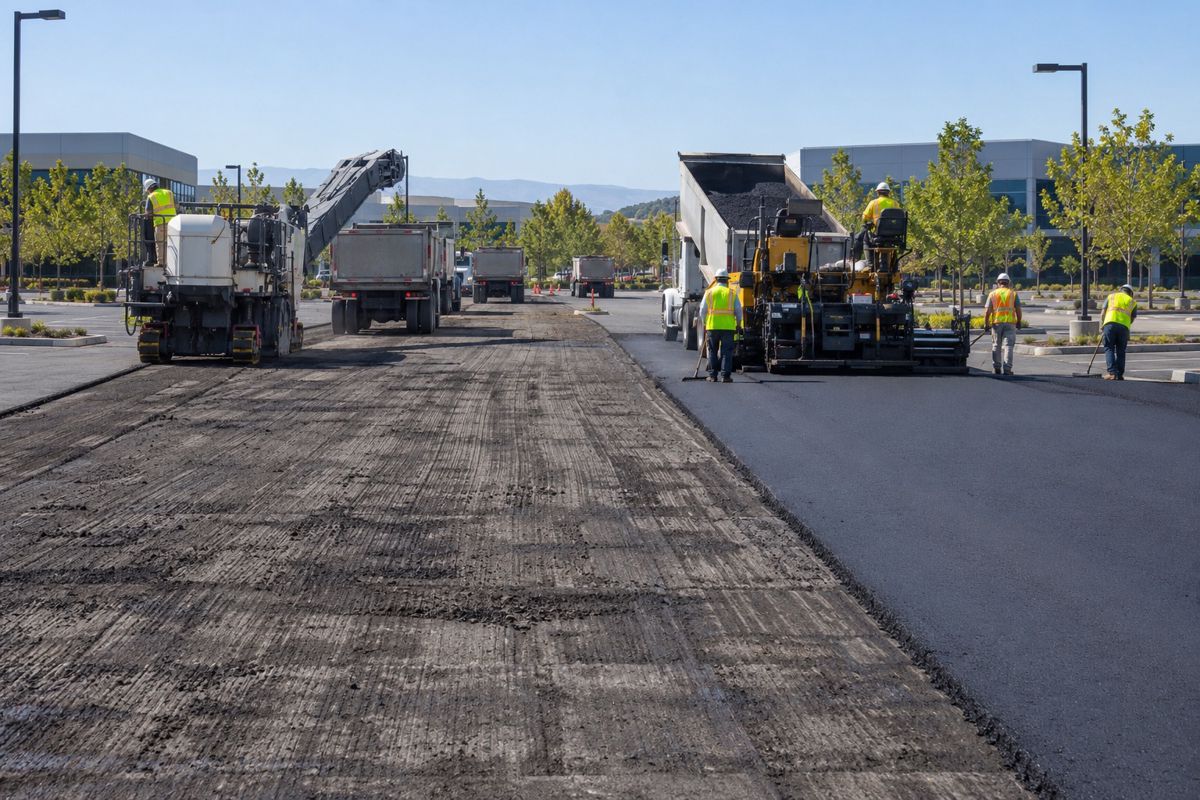
Milling and repaving a business park parking lot in Silicon Valley

Commercial paving in San Jose

Commercial paving in San Jose for parking lots

Parking lot paving, mill and overlay and resurfacing for businesses, offices, retail centers and property managers across San Jose.

  • Mill and overlay or full replacement
  • Phased plans to keep customers moving
  • Written scope for easy bid comparison

Step 1 of 3

What do you need?

What is commercial parking lot paving, and what is mill and overlay?

Commercial paving is the replacement or resurfacing of asphalt on lots, drive aisles and access roads. For most business owners, the choice is between three paths.

Mill and overlay

A milling machine grinds off the top layer of worn asphalt, usually a couple of inches. The surface is cleaned, damaged spots are repaired, and a new layer of hot asphalt is laid on top. This is often the economical choice when the base is still in decent shape.

Full-depth replacement

Everything is removed down to the base. The base is repaired and compacted, and new asphalt goes in. This is used when the base itself has failed.

Overlay without milling

A new layer goes directly over the old one. It can work when the surface is flat and the cracking is light, but it can raise the pavement height at curbs and drains.

The right path depends on what lies beneath the surface. A site walk and, where needed, a few test cores tell us far more than a photo can.

What problems do commercial lots in San Jose face?

Lots around San Jose business parks, shopping centers and apartment communities see steady traffic for years. Some of the common problems are:

  • Heavy trucks. Delivery vehicles and trash trucks stress the drive aisles and the areas near dumpsters.
  • Utility trenches. Patches along old trenches settle over time and crack at the edges.
  • Ponding water. Low spots and clogged drains soften the base and speed up failure.
  • Tree roots. Landscape islands and mature trees push up nearby asphalt.
  • Sun fade and raveling. A long dry summer ages the surface and loosens the stone.
  • Worn markings. Faded stalls and unclear lanes cause confusion and complaints.

Fixing small trouble spots early costs less than resurfacing the whole lot later. Our pothole repair and patching service handles isolated damage, and regular sealcoating and crack filling slows down wear on pavement that is still healthy.

What changes the price of a commercial paving job?

We do not publish prices, because every lot is different. A written quote follows a site visit. These are the main factors.

  • Total area. Square footage drives material and time.
  • Method. Milling and overlaying costs differ from full-depth replacement.
  • Base repairs. The amount of failed base that needs to be dug out and rebuilt.
  • Thickness. Lots with heavy trucks need a stronger design than a staff-only lot.
  • Drainage and grade. Fixing standing water may call for added work.
  • Phasing and hours. Working in stages or outside business hours changes the schedule and the plan.
  • Striping and ADA items. Re-marking the lot after paving is part of the scope, covered on our line striping page.

Ask every bidder to quote the same method, thickness and quantities so the numbers compare fairly.

Timing depends on the size of the lot and the method. A small lot might be finished in a day or two. A larger one can take several days or be split into sections. Weather matters. Asphalt needs dry conditions, so rain between about November and April can shift dates.

Most owners cannot close entirely, so we plan the work in phases. We mark off one section while another stays open, and we agree on an access plan for customers, deliveries and tenants. Some work can be done outside normal hours if that suits your business. Newly laid asphalt must be kept clear of traffic until it cools and sets, so tell your staff and tenants ahead of time.

What should you expect on the day, and when should you call?

Before the crew arrives, you will need to move vehicles from the work area. Notices to tenants and employees help. On the day, expect milling, trucks and hot asphalt equipment, with barriers and cones showing which areas are closed. When the surface is finished, we walk the lot with you and explain how long to keep traffic off.

Call when you see wide cracking, ponding water, repeated pothole patches or lots of failed edges. If the surface still has life, a repair and seal may be enough. If not, we will explain the choices in plain language. You can see our full range on the home page, or call (408) 555-0178.

How it works

Tell us about the surface

Size, condition and goals.

Site visit and quote

We measure and price it in writing.

Prep and paving

Base, drainage and surface done in the right order.

Free written estimates Local crews Clear timelines Site cleanup included

Request parking lot paving

Tell us what you need and we call you back.

No obligation.

Step 1 of 3

What do you need?

Questions about paving in San Jose

What is the difference between mill and overlay and a full replacement?

Mill and overlay removes the top layer of asphalt and puts down a new one, leaving the existing base in place. Full replacement removes the asphalt and repairs the base before new material goes in. Mill and overlay is usually the less disruptive choice when the base is healthy. Full replacement is needed when the base has failed. A site inspection decides which one your lot needs.

Can the business stay open while the lot is paved?

In many cases, yes, by working in phases. One section is closed and paved while another remains open, and traffic is routed around the work. Deliveries and tenant parking are planned in advance. Some projects are scheduled outside regular business hours. Full closures are sometimes needed for short periods, and we will tell you in advance if one applies to your site.

How do I know if I need resurfacing or just repairs?

Look at how much of the lot is affected. A few potholes or isolated cracks can be repaired and the rest sealed. Widespread alligator cracking, ponding water and patches over patches usually mean the base is failing, and resurfacing or replacement is the better long-term choice. If you are unsure, a walk of the lot with a contractor will answer it quickly.

Will you handle striping after paving?

Yes. Fresh asphalt needs its stalls, lanes, arrows and accessible bays marked again, and that work can be included in the same project. Accessible parking has dimension and signage rules, which are covered in more detail on our line striping page. Planning striping together with paving saves coordination time and makes the lot usable sooner.

What should a commercial paving quote include?

A good quote lists the area in square feet, the method, the asphalt thickness, the amount of base repair, the striping scope, the schedule and the payment terms. It should explain how traffic and access will be handled during the work. Written details let you compare bids evenly and avoid surprises. Be wary of vague bids that only list a single price.

Does rain affect a parking lot project?

Yes. Asphalt needs a dry base and moderate temperatures to bond and compact properly. Rain, especially between about November and April, can move the schedule. Work usually resumes when the surface has dried. If rain is forecast for your date, the crew should tell you and propose a new one. Ask about the weather plan when you review the quote.

Ready when you are Call now or request a quote online. Call for a free estimate Get my free paving quote (408) 555-0178

Takes about 30 seconds. Get my free paving quote