Skip to content
Free written estimatesLocal crews
Call now (408) 555-0178
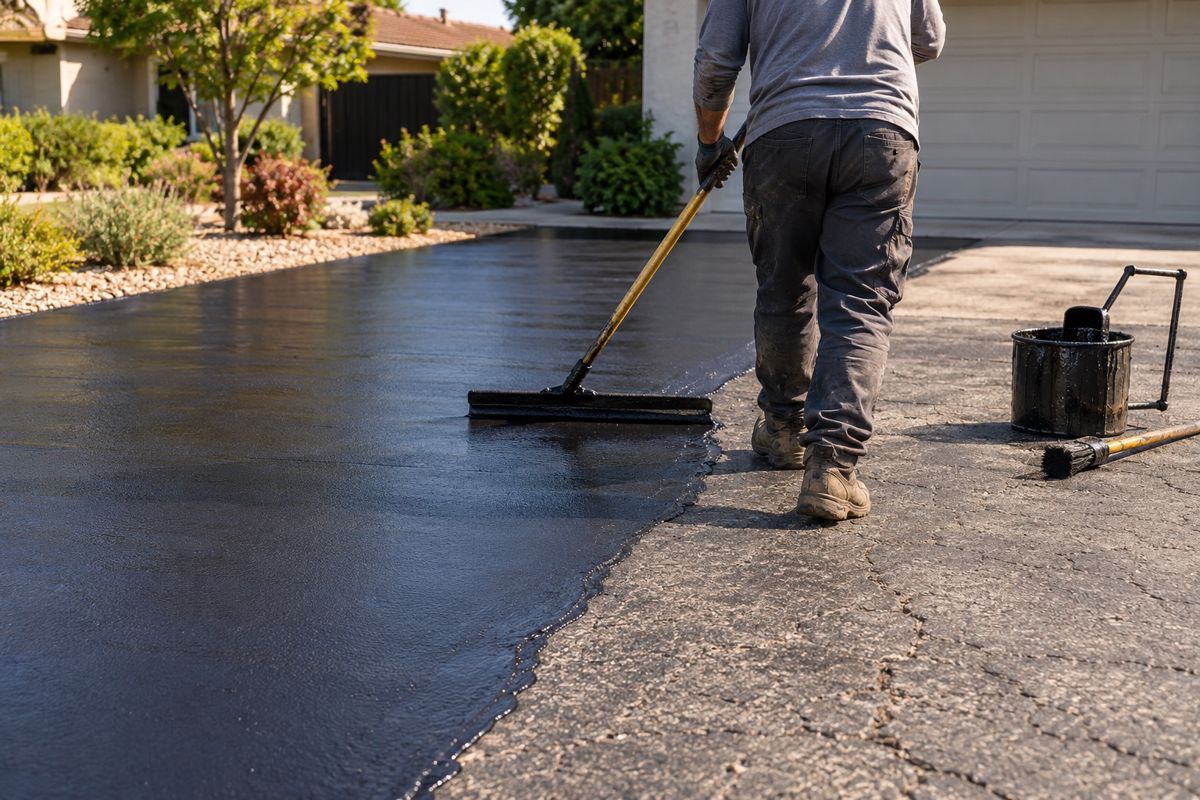
Worker applying black sealcoat across a faded cracked asphalt driveway

Sealcoating in San Jose

Asphalt sealcoating and crack filling in San Jose

Protect the pavement you already have. We fill cracks, clean the surface and apply sealcoat to driveways and parking lots.

  • Cracks filled before sealing
  • Driveways and commercial lots
  • Written scope and plain advice

Step 1 of 3

What do you need?

What is asphalt sealcoating and crack filling?

Asphalt dries out over time. Sun, air and water break down the binder that holds the stone together, and the surface fades from black to gray, turns rough and cracks. Sealcoating is a thin protective coating that slows that process. Crack filling is a separate step that keeps water from reaching the base.

Together they are the least expensive way to extend the life of pavement that is still sound. A sealcoat does not add structural strength. It will not repair alligator cracking, sunken areas or a failed base. For those, look at patching or driveway paving.

If you are searching for asphalt sealcoating San Jose property owners can trust, the key is a contractor who prepares the surface properly and tells you when sealing is the wrong answer.

How often should you sealcoat in San Jose?

For most driveways and lots, a fresh coat every two to three years is a common guide. New asphalt is typically left to cure for around six to twelve months before its first coat. Your own schedule depends on a few things.

  • Sun exposure. The long dry summer is hard on unshaded pavement.
  • Traffic. Busy lots and driveways with several vehicles wear faster.
  • Trees and sprinklers. Shade can slow aging, but leaf litter and irrigation overspray hold moisture against the edges.
  • Oil and fuel. Spills soften asphalt and break down sealer.

Deep black means the sealer is working. Dark gray is a good time to plan. Light gray with a rough, sandy feel means the surface is already exposed. Our blog covers this in more depth in the article on how often to sealcoat a driveway.

What changes the price of sealcoating?

Pricing follows the amount of work, so it is best to get a written quote after the contractor sees the pavement. The main drivers are:

  • Area. The square footage of the driveway or lot.
  • Crack count and width. More and wider cracks take more time and filler.
  • Surface condition. Oil spots, vegetation and heavy dirt need extra cleaning.
  • Number of coats. One thin coat and two coats are different jobs.
  • Type of sealer. Products vary in composition, and some areas limit certain types. Ask what is going on your pavement.
  • Access and scheduling. Lots that must stay open may need phasing.

Very low bids may mean the sealer is watered down or the prep is rushed. Ask what is included and compare scope as well as the total.

The work itself is quick. A typical driveway can be cleaned, crack filled and sealed in a day. Larger lots may take several days or be done in sections. The curing time is the part people notice. Sealcoat needs dry weather and mild temperatures, and many contractors avoid working when the ground is wet or the temperature is below roughly 50 degrees Fahrenheit. Traffic usually has to stay off for a day or two while it cures.

The dry season in San Jose is a good window for this work. Rain can force a postponement, and a responsible crew will not seal damp pavement. Plan where to park, and switch off sprinklers that reach the driveway for the cure period.

What should you expect on the day, and when should you call?

A normal job goes in this order. The crew sweeps and blows off the surface and cleans oil spots. Cracks are cleaned and filled. The sealer is mixed and spread evenly. The area is closed off until it has cured. We walk the surface with you at the end and tell you how long to wait before driving on it.

Call when you notice fading to gray, small hairline cracks, a rough texture or water soaking in. Early attention is the cheapest. If cracks have joined together or the surface is moving, a coating will not hold, and we will say so. For wider repairs, ask about our work on commercial parking lots. You can also start at the home page. To get going, call (408) 555-0178 or send the short form.

How it works

1

Tell us about the surface

Size, condition and goals.

2

Site visit and quote

We measure and price it in writing.

3

Prep and paving

Base, drainage and surface done in the right order.

Free written estimates Local crews Clear timelines Site cleanup included

Request sealcoating

Tell us what you need and we call you back.

No obligation.

Step 1 of 3

What do you need?

Questions about paving in San Jose

How long does sealcoating last?

A coat usually protects pavement for about two to three years before it wears thin, depending on sun, traffic and weather. Heavily used lots may need attention sooner, and shaded driveways may last longer. Sealcoating does not repair damage that is already there. It slows future wear, so the best results come from sealing sound pavement on a regular schedule rather than waiting until it has failed.

Why are cracks filled before sealing?

Sealcoat is a thin film and cannot bridge a crack. If cracks are left open, water gets into the base and weakens it, and the coating will fail over the crack. Filling the cracks first closes those paths. Wider cracks may need a filler made for the job, and some are too large or too connected to fill, which means a patch or other repair is the better choice.

Can you seal a brand new driveway?

Not right away. New asphalt holds oils that need time to work out, and sealing too early can cause peeling or a soft surface. Most contractors recommend waiting about six to twelve months. Once the surface has weathered and is ready, regular sealing every few years helps it last. If you are unsure of the age of your pavement, ask a crew to take a look.

What weather do you need for sealcoating?

You need a dry surface and mild temperatures. Many contractors avoid sealing in rain, on damp ground, or when temperatures are below roughly 50 degrees Fahrenheit. Dry months in San Jose are ideal. If rain is forecast, the job should be moved. Ask your contractor how they handle weather delays before you book.

Is sealcoating worth it for a parking lot?

For lots with healthy pavement, regular sealing and crack filling are one of the most cost-effective ways to extend life and delay resurfacing. It also refreshes the look of the lot. It will not help a surface with a failed base or widespread alligator cracking. We inspect the lot and say whether sealing makes sense or whether repair or resurfacing is the better use of money.

Are there rules about sealer type in California?

Some regions restrict certain sealer products, especially those containing coal tar, and local stormwater rules can apply to how product is handled and washed off. Requirements change, so ask any contractor what product they plan to use and check with the City of San Jose if you are unsure. A good contractor will answer plainly and put the product type in the quote.

Ready when you are. Call now or request a quote online.

Call for a free estimate
Takes about 30 seconds. Get my free paving quote