
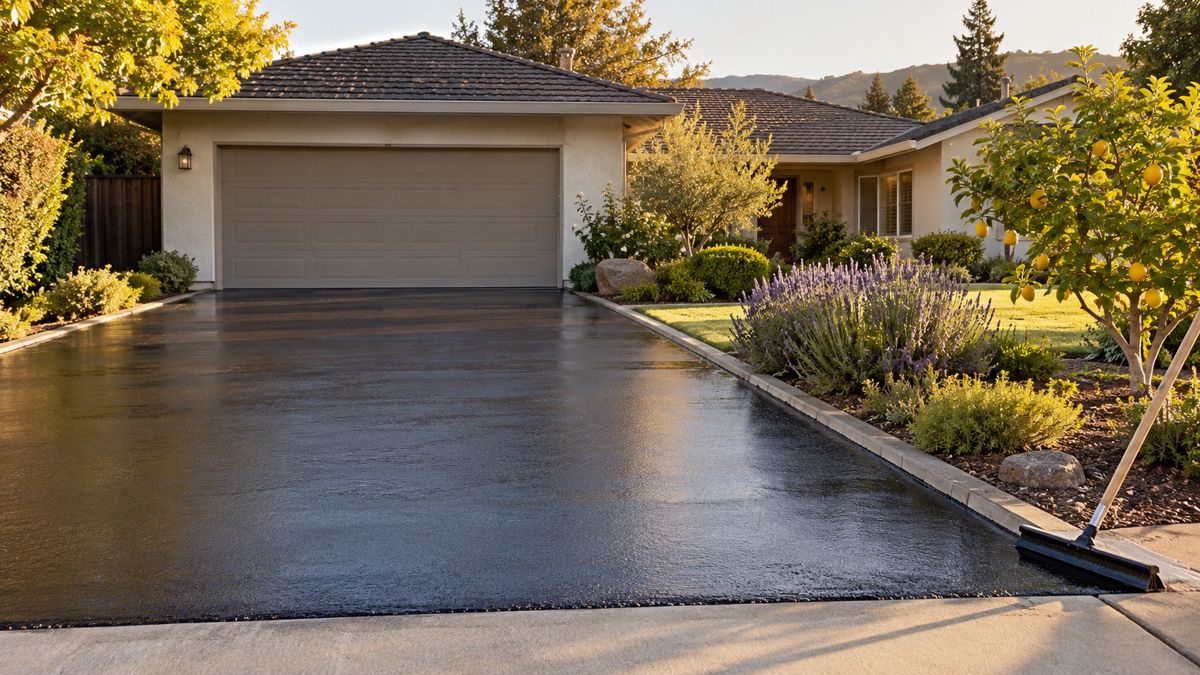
For most homeowners, the short answer is every two to three years. A brand new driveway should wait about six to twelve months before its first seal, so the asphalt can finish curing. After that, a steady schedule keeps the surface flexible and slows cracking. Your own driveway may sit at either end of that range, and this guide explains why.
How often should you sealcoat a driveway in San Jose?
Two to three years is the range most paving professionals work from. It is a rule of thumb, not a law. A driveway in full sun with heavy use may want attention sooner. A lightly used driveway shaded by a mature tree may last longer between coats.
Sealcoat is a thin protective layer. It does not add strength to the pavement. What it does is block water, soften the damage from sunlight and make oil spills easier to live with. When the layer wears thin, the asphalt underneath starts to dry out, turn gray and crack. Sealing again before that happens is much cheaper than repairing the damage afterwards.
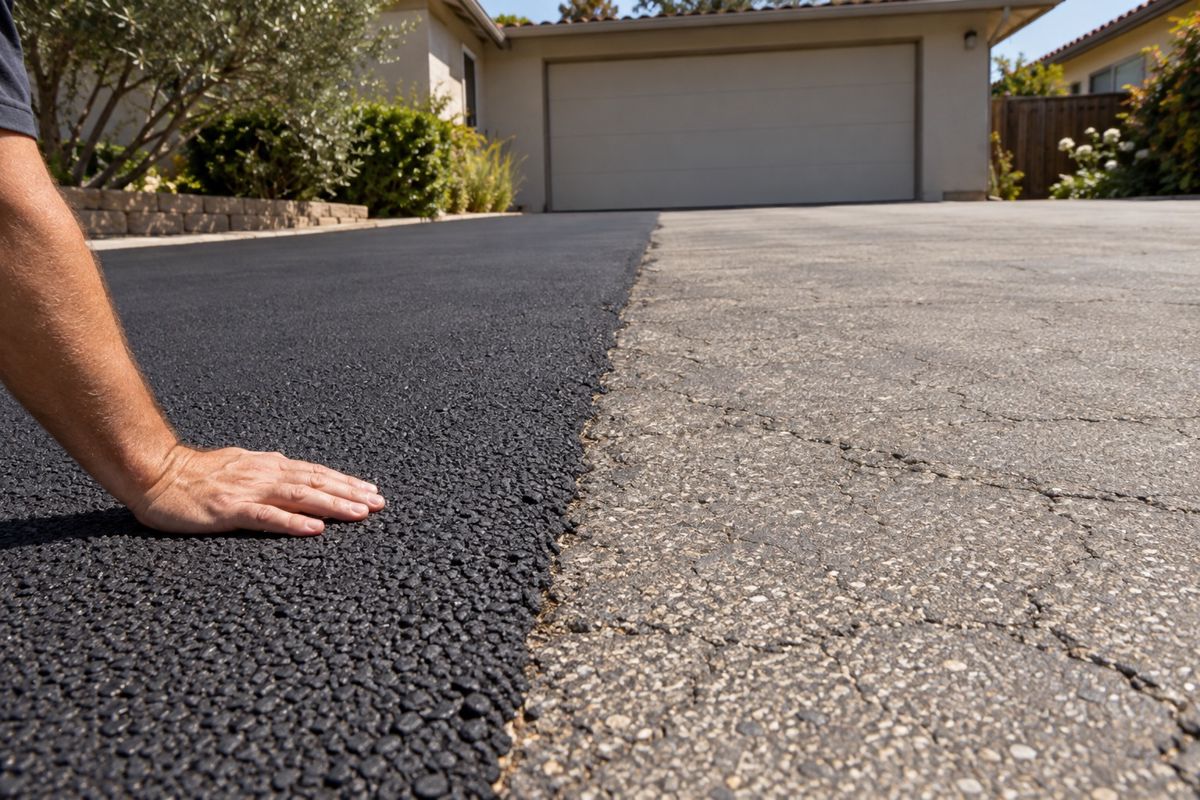
If you are not sure where your driveway stands, look at the color. Deep black means the sealer is still working. Dark gray is a good time to plan. Light gray with a rough, sandy feel means the surface is already exposed.
When is a new driveway ready for its first coat?
Fresh asphalt contains oils that need time to work out of the mix. Seal too early and the coating can peel, stay soft or trap those oils. Most contractors suggest waiting around six to twelve months. In San Jose, where the long dry season helps new pavement cure, many people schedule the first seal for the following spring or early fall.
During that first year, a few habits help:
- Avoid parking in the exact same spot every day in hot weather.
- Do not turn the steering wheel while the vehicle is standing still.
- Keep sprinkler heads from spraying the edges of the driveway.
- Keep sharp objects such as motorcycle kickstands off the surface.
If your driveway was paved by someone else and you do not know its age, ask a paving crew to look at it. The surface will tell most of the story.
What makes San Jose driveways wear faster or slower?
The Santa Clara Valley has a Mediterranean pattern. Summers are dry and sunny, and most rain falls between about November and April. That mix puts different stress on a driveway across the year.
Sun
Ultraviolet light and heat dry out the oils in asphalt. A driveway that gets afternoon sun all summer will fade faster than one in shade.
Trees and landscaping
Roots can lift edges, and falling leaves hold moisture against the surface. Irrigation overspray is a quiet culprit. Water that reaches the pavement every morning breaks down the edges over time.
Soil
Some parts of the valley have clay soil that swells when wet and shrinks when dry. That movement can crack the edges and low spots of a driveway, whatever the sealer condition. Good drainage and a solid base matter as much as the coating.
Use
Two family cars, a work truck or a boat trailer will wear a driveway more than a single small car. Slow turning on hot days leaves scuffs and ruts.
What are the signs it is time to seal?
You do not need a calendar to tell. Walk the driveway on a dry day and look for these signs:
- The color has faded from black to gray.
- The surface feels rough, and you can see small stones at the top.
- Hairline cracks are starting to appear.
- Water soaks in rather than beading and running off.
- Oil stains look deeper and spread out at the edges.
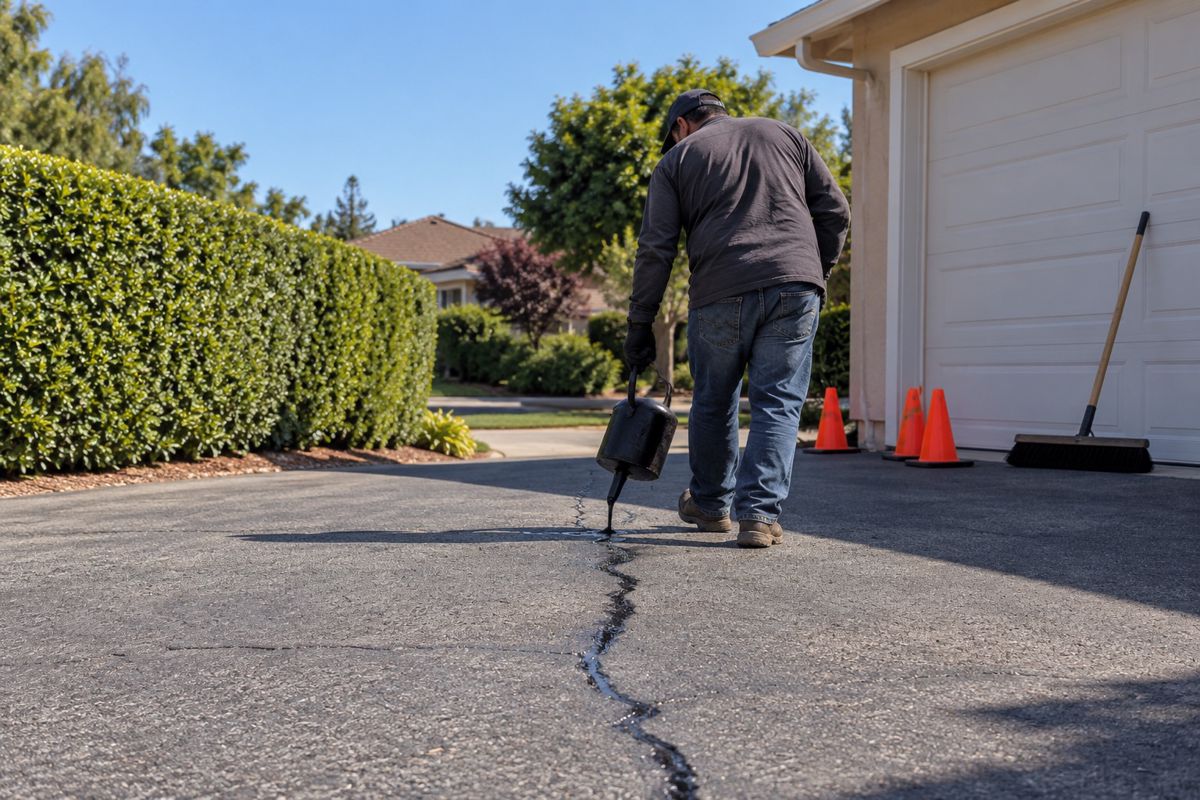
If you see several of these, plan the work for the next dry stretch. If you see only one, you may have another season before it matters. Cracks wider than a pencil should be filled before any coating goes on, since sealer alone will not bridge them.
When is sealcoating the wrong answer?
Sealcoating helps pavement that is basically sound. It does not fix a failing base. If your driveway shows any of the problems below, a coating will only hide them for a short time:
- Alligator cracking, where the surface looks like reptile skin.
- Sunken areas or ruts where water collects.
- Edges that crumble away.
- Potholes or soft spots that move when you step on them.
Small damaged areas can often be cut out and repaired. See our page on pothole repair and asphalt patching for how that works. If most of the driveway has failed, it is usually better to replace it than to keep patching. Our guide to asphalt driveway paving covers what a replacement involves.
How should you prepare, and what happens on the day?
Good sealcoating is mostly preparation. A typical job looks like this:
- The crew sweeps and blows off the surface and cleans oil spots.
- Cracks are cleaned and filled with a hot or cold rubberized filler.
- The sealer is mixed, then spread evenly with a squeegee or sprayer, usually in one or two coats.
- The driveway is closed off while it cures.
Work needs dry weather and mild temperatures. Many contractors will not seal when the ground is damp or when the temperature is below roughly 50 degrees Fahrenheit. Traffic usually has to stay off for a day or two, so plan where to park and turn off your sprinklers for that period.
What should you ask before you hire someone?
Sealcoat quality varies a lot, and it is hard to judge once it is on. Ask these questions before you agree to anything:
- What type of sealer will you use? Some regions limit coal tar products, so ask what is in the mix and why.
- How many coats are included, and how will cracks be handled?
- Is the quote in writing, with the area and scope listed?
- Can you show proof of license and insurance?
- What is the plan if rain is forecast on the scheduled day?
Be cautious of any offer that is far below the others. Thin, watered-down sealer looks fine for a few weeks and then wears off. The price of sealing depends on the size of the driveway, its condition, the number of cracks and the type of sealer.
What is the next step?
If your driveway is dark gray, a little rough or starting to crack, a fresh seal is likely worth it. If it looks worse than that, a short inspection will tell you whether you need a patch or something bigger. Read about our asphalt sealcoating and crack filling service, or tell us about your driveway and we will give you a plain recommendation and a written quote.